
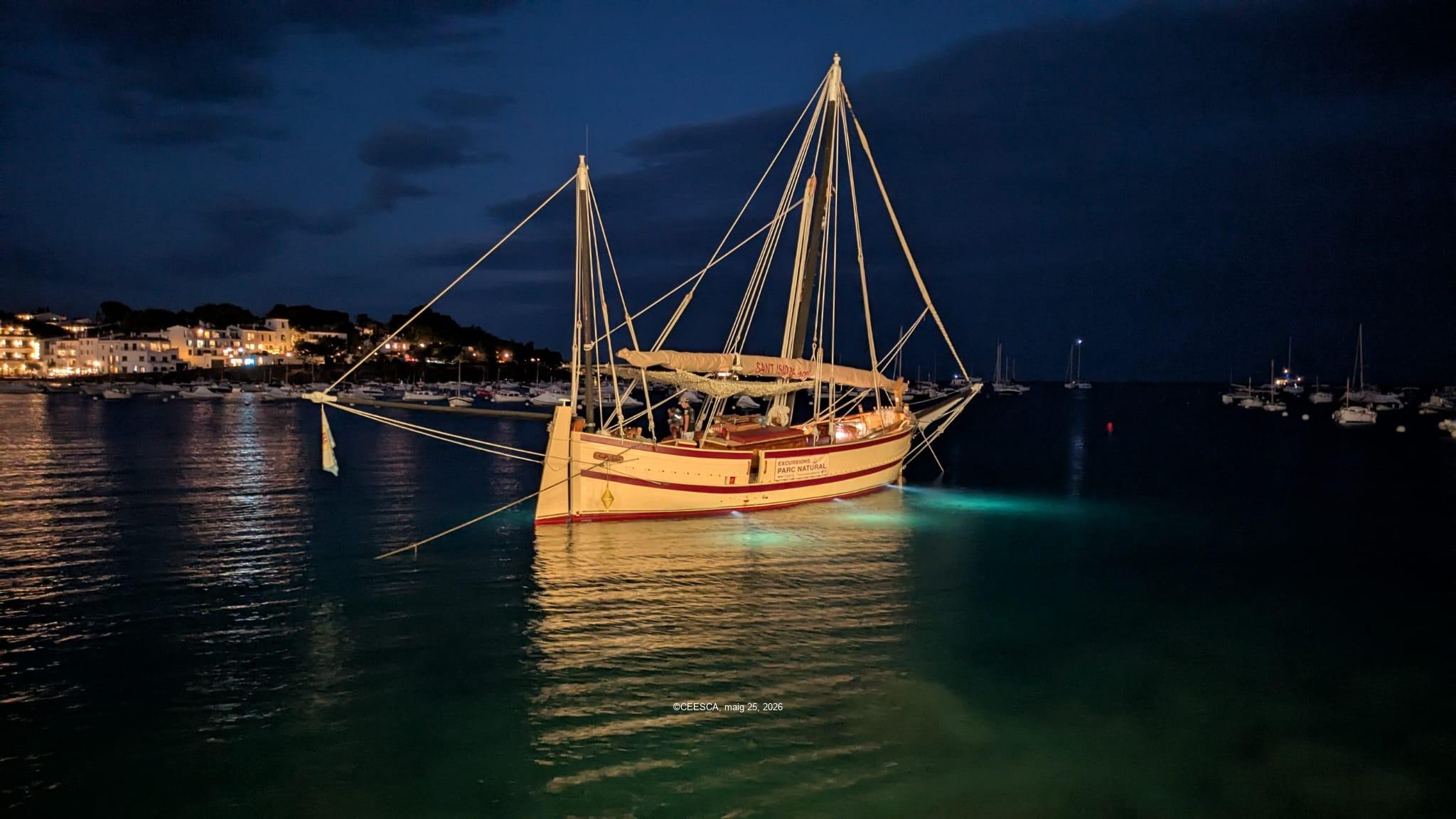
In the heart of the bay, between the gentle rocking of boats and the echo of an ancient craft, a key figure in the village’s maritime memory is slowly fading away: the last boatbuilder of Cadaqués. With him, not only an artisan retires, but an entire way of understanding the sea, wood, and time.
For decades, his workshop has been a discreet but essential space where tradition was kept alive through every tool, every joint, and every piece of wood shaped with precision. There, far from the noise of tourism and accelerated modernity, boats that formed part of the village’s everyday landscape were built and restored.
The boatbuilder did not just construct boats; he understood them. He knew how wood behaves with humidity, wind, and salt. He knew how to listen to the sea even before seeing it. Every vessel that passed through his hands was unique, custom-made, combining technique and intuition that can hardly be learned from books.
The most experienced fishermen still remember how fully they trusted his work. “When a boat left his workshop, you knew it would withstand any storm,” they say. That trust was built not only on skill, but on years of experience and absolute dedication to the craft.
Over time, however, the demand for this type of work has decreased. Modern boats, made with industrial materials, have replaced traditional ones. The slow, meticulous rhythm of the boatbuilder has been displaced by faster, more economical processes. Still, he has continued working, faithful to a way of doing things that does not understand haste or fashion.
His workshop, filled with wood, old tools, and the characteristic smell of resin, is now almost a living museum. Every corner tells a story, every mark on the wood is evidence of years of silent work. But it also raises an inevitable question: what will happen when he is gone?
His retirement is not only a professional loss; it is a cultural one. The boatbuilder represents a direct link to Cadaqués’ past, to a time when the sea was not just a landscape, but a way of life. His figure reminds us of the importance of preserving traditional crafts, not only as heritage, but as a living part of collective identity.
Today, the village pays tribute to him not only for his career, but for what he represents: resilience, wisdom, and respect for time and matter. In a rapidly moving world, his story invites us to pause and value what is built with patience.
When the last boat leaves his workshop, it will not just be the end of a job. It will be the end of a language, of a way of seeing the sea, and of a craft that, for generations, has shaped the soul of Cadaqués.